The digital world has transformed the way businesses connect with customers. Today, companies of every size use search engines, social media, websites, email, online advertising, and content to promote products and services. This growth has created strong demand for trained digital marketing professionals. Students, graduates, working professionals, freelancers, and business owners are therefore looking for practical ways to develop these skills.
Mumbai is one of India’s largest business and commercial hubs, making it an excellent place to build a career in online marketing. A good digital marketing course in Mumbai can provide structured learning, practical assignments, industry knowledge, and exposure to important marketing tools. However, choosing the right program requires careful comparison of curriculum, trainers, practical projects, fees, certification, internship opportunities, and career support.
This article explains everything you need to know before selecting a digital marketing course in Mumbai. It also covers the best digital marketing courses in Mumbai, digital marketing course fees in Mumbai, how to select a digital marketing course institute in Mumbai, and practical ways to learn digital marketing in Mumbai.
Digital Marketing Course in Mumbai
A digital marketing course in Mumbai is designed to teach learners how businesses attract, engage, convert, and retain customers through digital channels. A complete program usually combines marketing fundamentals with practical training in SEO, social media, paid advertising, content, email, analytics, and conversion optimization.
The biggest advantage of learning through a structured course is that you can follow a clear path instead of trying to learn hundreds of disconnected topics online. Beginners can understand the basics first and then move toward advanced strategies. Professionals can also use the training to update their existing skills.
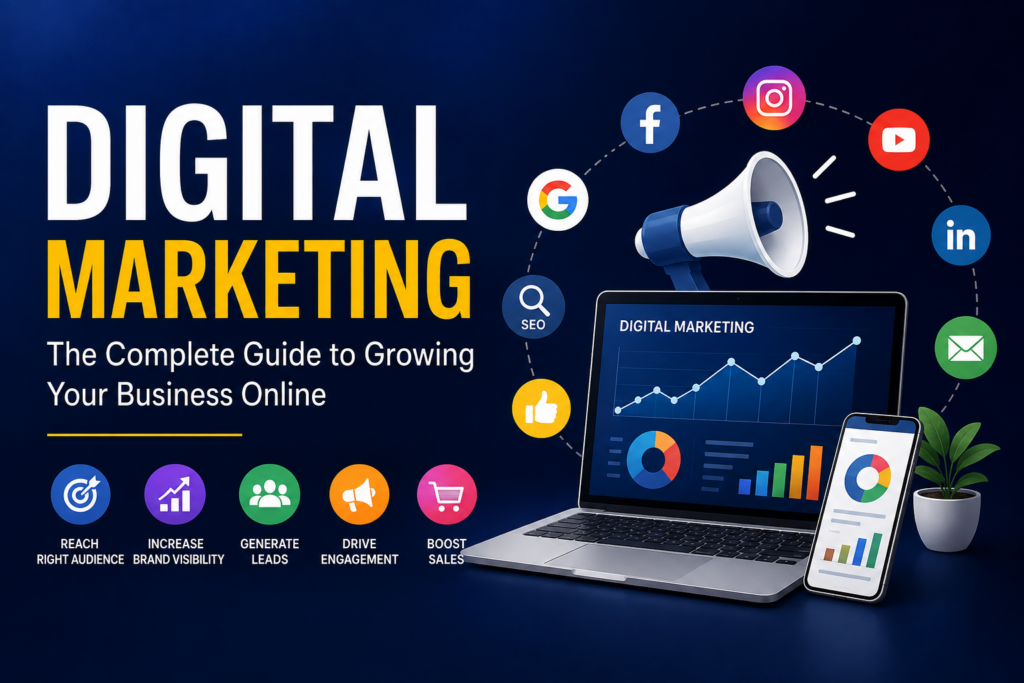
Mumbai provides an interesting environment for digital marketing education because the city has businesses from finance, entertainment, real estate, education, healthcare, fashion, hospitality, technology, and e-commerce. This variety helps learners understand how marketing strategies change according to different audiences and industries.
When choosing a digital marketing course in Mumbai, check whether the course includes practical assignments. You should ideally work on keyword research, website optimization, content planning, social media campaigns, advertising exercises, analytics reports, and marketing strategies.
Best Digital Marketing Courses in Mumbai
People searching for the best digital marketing courses in Mumbai should not compare programs only by advertisements or fees. The best course is the one that matches your learning goals and provides useful practical exposure.
A strong course should have an updated syllabus covering the major areas of digital marketing. These may include search engine optimization, social media marketing, Google Ads, Meta Ads, content marketing, email marketing, affiliate marketing, web analytics, conversion optimization, local SEO, and online reputation management.
Trainer experience is another important factor. Experienced trainers can explain concepts using real examples and show learners how strategies are applied in business situations. Before enrolling, check the trainer’s professional background and teaching approach.
Practical projects are equally important. A student who has completed an SEO audit, social media strategy, sample advertising campaign, content calendar, or analytics report can demonstrate practical ability more effectively than someone who has only studied theory.
The best digital marketing courses in Mumbai should also provide opportunities to ask questions, receive feedback, and improve project work. Internship support, career guidance, resume assistance, interview preparation, and placement support can be additional advantages.
Digital Marketing Course Fees in Mumbai
Digital marketing course fees in Mumbai vary from one institute to another. The total cost can depend on course duration, number of modules, training format, trainer experience, practical projects, certifications, internships, learning resources, and career services.
Short-term programs usually focus on selected topics and may have lower fees. Comprehensive programs covering multiple areas generally require more time and may cost more. Some advanced programs also include specialized performance marketing, analytics, e-commerce, or advanced SEO training.
When comparing digital marketing course fees in Mumbai, make a list of everything included in the package. Ask whether study materials, assignments, live projects, tools, certifications, internship opportunities, doubt sessions, and placement assistance are included.
Do not choose a course simply because it has the lowest price. A cheaper course may not offer enough practical exposure. At the same time, an expensive course is not automatically the best choice. Compare the complete value, quality of training, curriculum, support, and learning outcomes.
It is also useful to ask about payment options and course duration before enrollment. Understanding the complete fee structure helps you plan your education budget and avoid unexpected costs later.
Digital Marketing Course Institute in Mumbai
Selecting a digital marketing course institute in Mumbai is an important decision because the institute can influence the quality of your learning experience. Before joining, research the institute carefully and compare several options.
Start with the syllabus. Make sure the institute teaches current digital marketing practices rather than outdated techniques. SEO, social media platforms, advertising systems, analytics tools, and content strategies change regularly, so updated training is important.
Next, check practical training. A reliable digital marketing course institute in Mumbai should provide assignments and projects that allow students to apply concepts. Practical work can include optimizing website pages, creating keyword plans, developing social media calendars, preparing advertising campaigns, writing content, and analyzing performance.
Also consider class format. Classroom learning can provide direct interaction, while live online training can offer flexibility. Hybrid programs can combine both benefits. Choose a format that fits your schedule and allows regular practice.
You should also ask about internship and placement assistance. These services cannot guarantee a job, but they can help students understand recruitment processes, improve resumes, prepare for interviews, and identify suitable opportunities.
Learn Digital Marketing in Mumbai
If your goal is to learn digital marketing in Mumbai, begin with the fundamentals. Understanding how digital channels work together is more important than immediately trying to master every platform.
Start by learning the digital marketing funnel. Understand awareness, consideration, conversion, retention, and customer loyalty. Then learn how SEO, content marketing, social media, paid advertising, and email marketing can support different stages of the customer journey.
After learning the basics, choose practical areas to develop. For example, you can start with SEO and content marketing. Create a simple website, research relevant keywords, publish useful articles, optimize pages, and monitor performance. Later, add social media and paid advertising.
Practice should be a regular part of your learning routine. If you learn digital marketing in Mumbai through an institute, use assignments to create portfolio projects. Save research, strategies, screenshots, reports, and results so that you can demonstrate your work to employers or clients.
You can also learn through free resources, industry blogs, online tutorials, webinars, and experimentation. However, structured training can make the process easier by giving you a planned curriculum, trainer guidance, deadlines, and feedback.
Major Modules in a Digital Marketing Course
Search Engine Optimization, or SEO, is one of the most important modules. Students learn keyword research, search intent, on-page SEO, technical SEO, internal linking, local SEO, backlinks, content optimization, and performance tracking.
Social media marketing teaches students how to build an online presence and communicate with audiences. Topics may include content planning, profile optimization, audience research, posting schedules, community management, social media advertising, and analytics.
Google Ads and paid advertising teach learners how to reach potential customers through targeted campaigns. Important topics include keywords, ad groups, campaign objectives, bidding, budgets, ad copy, landing pages, remarketing, and conversion tracking.
Meta Ads can help businesses reach specific audience segments on Facebook and Instagram. Learners can study campaign objectives, audience targeting, creatives, placements, budgets, retargeting, and performance measurement.
Content marketing focuses on creating useful and relevant information for a target audience. Students can learn blog writing, website content, social media content, video ideas, content calendars, keyword-focused articles, and content distribution.
Email marketing covers newsletters, promotional campaigns, segmentation, personalization, automation, subject lines, and performance analysis. Web analytics teaches learners how to understand traffic, engagement, conversions, events, and campaign performance.
Career Opportunities After a Digital Marketing Course
A digital marketing course in Mumbai can prepare learners for several professional roles. The right career path depends on personal interests, strengths, experience, and specialization.
SEO Executive or SEO Specialist is a common entry-level option. These professionals work on website visibility, keyword research, on-page optimization, technical improvements, link building, and search performance.
Social Media Executive or Social Media Manager creates content strategies, manages brand profiles, engages with audiences, coordinates campaigns, and studies social media results.
PPC or Google Ads Specialists manage paid search campaigns, budgets, keywords, advertisements, audiences, landing pages, and conversion tracking.
Content Marketing Specialists plan and create articles, website pages, social media content, and other marketing materials. Performance marketing professionals focus on measurable outcomes such as leads, sales, conversions, and return on advertising spend.
Digital Marketing Analysts study marketing data and prepare reports. They identify trends, monitor key performance indicators, and help businesses make data-driven decisions.
Freelancing is another option. Professionals can provide SEO, social media management, content writing, paid advertising, website optimization, email marketing, and analytics services to clients.
Skills You Should Develop
Completing a digital marketing course in Mumbai should help you develop practical skills, not just collect certificates. Important skills include keyword research, SEO, content writing, social media management, paid advertising, audience research, campaign planning, analytics, reporting, conversion optimization, basic website management, and communication.
Problem-solving is also essential. Campaigns do not always perform as expected. A good marketer must examine data, identify weaknesses, test solutions, and measure results.
Communication skills are useful because digital marketers often work with clients, designers, developers, sales teams, and business owners. Time management and creativity can also improve performance.
Build a Portfolio While Learning
A portfolio gives employers and clients evidence of your abilities. Instead of simply saying that you know SEO or advertising, show examples of your work.
You can create an SEO audit for a sample website, a thirty-day social media calendar, a sample Google Ads campaign, a Meta Ads strategy, an optimized blog article, or an analytics report.
If you are taking a digital marketing course in Mumbai, ask whether your projects can be used in a professional portfolio. Explain the objective, research, strategy, execution, and result for every project.
How to Choose the Right Course
Your ideal digital marketing course in Mumbai depends on your goals. Beginners should choose a program that explains fundamentals clearly. Experienced professionals can select advanced modules that fill specific knowledge gaps.
If your goal is employment, prioritize practical projects, portfolio development, interview preparation, and placement assistance. If you want freelancing, focus on service delivery, client communication, reporting, and lead generation. Business owners should focus on SEO, paid advertising, social media, analytics, and conversion optimization.
Before selecting among the best digital marketing courses in Mumbai, compare syllabus, trainers, practical work, duration, certification, internship support, and overall value.
Conclusion
A digital marketing course in Mumbai can help students, professionals, freelancers, and entrepreneurs develop valuable skills for today’s online economy. Mumbai’s diverse business environment creates many opportunities to apply these skills across different industries.
When comparing the best digital marketing courses in Mumbai, focus on practical learning, updated curriculum, trainer experience, projects, internships, certification, and career support. When checking digital marketing course fees in Mumbai, compare the complete value rather than choosing only the cheapest option.
Choosing the right digital marketing course institute in Mumbai can provide structured guidance and practical exposure. If you want to learn digital marketing in Mumbai, start with fundamentals, practice consistently, build a portfolio, and continue updating your knowledge.
With the right training and regular practice, digital marketing can become a strong career skill. Whether you want a job, freelance clients, or business growth, the knowledge gained from a professional course can help you understand online customers, create effective campaigns, measure results, and make better marketing decisions.